
 Luiz Castellano
6 Effective Ways to Collect & Manage Customer Feedback in 2025
In this read, we have given some effective ways via which you can collect the feedback, further, we have explained how changelogfy can help you to manage them

Hey, can you provide this X feature, which would help us achieve Y?
Asked User A in the chat on SaaS product B.
Now, the stakeholders of SaaS B must decide whether to treat this feedback as important.
If you’re just starting, you’ll see a lot of feedback coming in, and managing it can quickly overwhelm you.
I’m not saying you should ignore feedback. Getting it is great; it reassures you, as a product stakeholder, that a real market exists for what you’re building.
But the game doesn’t end here. Getting them consistently is only one part of the story; organising and managing it is what steers your product in the right direction.
Feedback can come from anywhere. In my case, when I was starting Changelogfy, one of the very first pieces came from my wife (who’s actually from a completely different domain 😋). She tried the early beta and simply said,
The dashboard looks a bit overwhelming. Could you add a quick‑start checklist so new users know where to begin?
I took her advice because if she felt lost, other users probably would too.
You see, they can come from family, friends, chat messages, and every social platform where you’re active. That volume can get overwhelming fast, and therefore organising them is crucial. When organised, product teams have a clear view of what needs to be done next.
This guide will walk you through a few ways to manage them, so you can get value from every piece.
But let’s first discuss what good feedback is:
What’s Good Feedback & What's Not?
You’ve probably heard the saying that not every piece of advice is worth taking. The same applies to feedback: not all of it carries equal weight!
Some comments exist purely for the sake of being heard and don’t deserve precious development time. To show why, let’s break feedback into a few clear categories, both good and bad, so you can quickly see which insights are worth acting on.
Feedback can generally be grouped into several types of feedback, such as feature requests, usability issues, bug reports, or emotional reactions. Identifying the type helps determine how and when to act on it.
Let’s quickly look at some characteristics of feedback that need your attention!!
Characteristics of Good Feedback
Specificity
Vague statements like “I don’t like this feature” or “It’s too slow” aren’t very helpful. Specific feedback tells you exactly which part of the product is causing friction, how it impacts the user, and why it matters. For instance, “When I try to add a new team member in the billing portal, the process takes six steps; I’d love a shorter workflow” is much more detailed. Feedback that builds on what you’ve already created is worth a closer look.Context and Use Case
Strong feedback often includes real-world context. SaaS users come from a variety of industries, so it’s vital to know how they’re using your product.That context might look like “I’m a small business owner who needs to onboard five new people each month. The current tool is too complex for my team, which slows us down.” When you capture this kind of detail, you can quickly see which use cases deserve priority in your roadmap.
Actionability
Good feedback doesn’t just describe a problem; it points toward a potential fix or at least clarifies what users ultimately want. Even if they don’t have the perfect solution in mind, an actionable note might read, “It would be great if the analytics dashboard had filters by user role, so I can see usage metrics for admins vs. contributors.” Your product team now instantly know what to build or research next.Alignment with Product Goals
Not every request should turn into a feature. Feedback is “good” when it aligns with your product vision, your roadmap, and the core problems your SaaS aims to solve.
While out‑of‑scope requests can still spark new ideas, focusing on feedback that matches strategic goals makes sure you don’t derail your roadmap.
What’s Not‑So‑Great Feedback & Not Worth Investing Time In
- Overly vague. “I don’t like this design” or “Your product is confusing” gives no clear direction.
- No context. Feedback that doesn’t explain why something is an issue is tough to act on.
- Purely emotional. Some users will vent or rant without offering specifics. The frustration may be worth exploring, but on its own it doesn’t help you prioritise improvements.
- Out of scope. Requests for features that have nothing to do with your product’s purpose or market. You don’t need to dismiss them outright, but treating them the same as goal‑aligned feedback will muddy your priorities.
The purpose of separating good feedback from the less valuable kind is to filter out the noise and organise only the insights worth deeper analysis.
Once you clear away the fluff, you can organise and manage feedback far more effectively.
Now, let’s look at some practical ways to collect that high‑value feedback.
6 Effective Methods to Collect Feedback For Your Product
Collecting Feedback while on Live Chat
Live chat is a quick, real-time way to capture feedback the moment users encounter issues or have suggestions.
Because it’s immediate, you can ask follow-up questions right away and get clearer insights. Once a user shares something valuable, be it a bug report or a feature request, log it in your feedback system so nothing slips through the cracks. This makes each chat session a chance to gather truly actionable input.
Social Media Like Reddit
Reddit is a great way to see what people are saying about your product or your competitors, in real time.
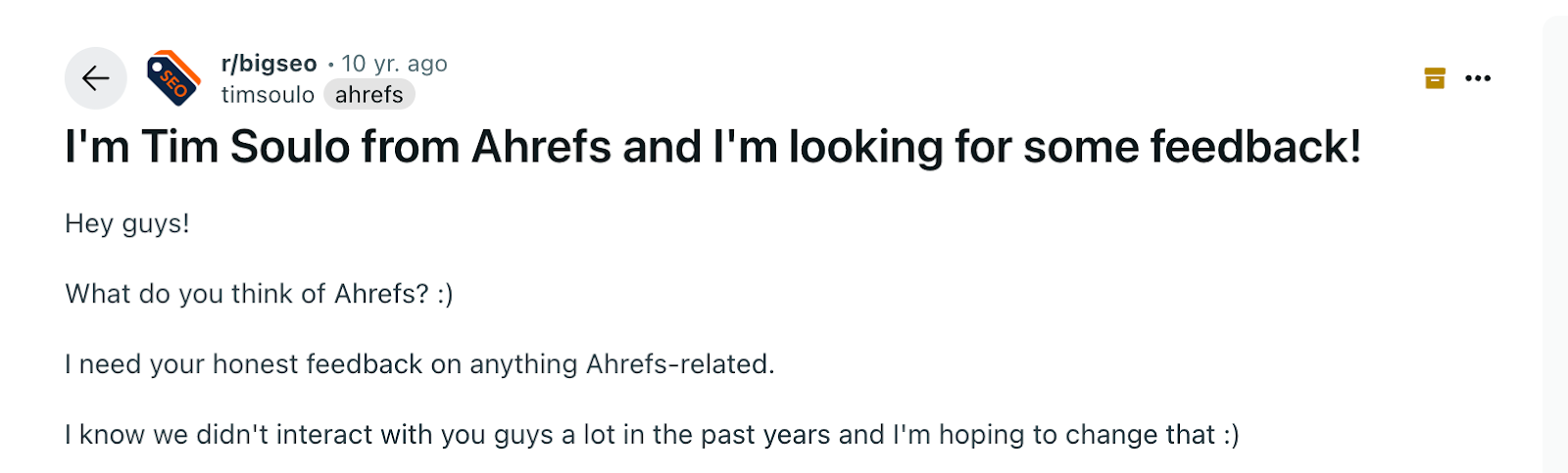
Not only can you discover what users want, but you can also learn which features they’re requesting elsewhere. This helps you spot trends and understand broader market needs. A free tool like F5bot lets you track brand mentions, so you can quickly jump into relevant conversations and capture valuable feedback without constantly browsing Reddit.
Reviews
Review sites like Capterra, G2, and Trustpilot let you gather feedback from real users and build social proof at the same time.
Once you’ve set up a profile, encourage happy customers to leave reviews, and be sure to respond (even to critical comments).
A thoughtful reply not only shows you care, but it can also prompt more detailed feedback in the future.
On the top of that, knowing how to handle negative feedback professionally not only preserves your brand reputation but often turns detractors into loyal advocates. Address critical reviews with empathy, clarity, and a genuine willingness to improve.
Surveys
Survey tools such as Jotform or SurveyMonkey are among the best ways to collect feedback for a SaaS product. Product managers can run timely surveys to keep their teams aligned with market trends.
One of the most common and useful survey formats is the NPS (Net Promoter Score), which helps you gauge overall customer loyalty by asking a single question: “How likely are you to recommend our product to a friend or colleague?
However, don’t overdo it; sending surveys too often dulls their impact.
If you’re on a tight budget, free options like Google Forms work just fine.
To entice users, offer a relevant reward. The key is choosing the right incentive—you want loyal customers who can provide meaningful feedback. Offer rewards that genuinely improve their experience with your product.
Using Email for Feedback
Email is a channel most people feel comfortable with, and it offers a straightforward way to gather customer feedback. Segment your audience into relevant groups (for example, new sign‑ups versus long‑time customers) and tailor your messages accordingly. This is a foundational tactic in lead generation that helps convert engaged users into qualified leads.
Stay in touch by emailing customers periodically. This nurtures a long‑term relationship, making them more likely to share feedback when something comes up. Because you’re already in regular contact, you can also ask for feedback every once in a while, without it feeling out of the blue.
Be strategic about the questions to ask customers, such as “What’s one thing we could do to improve your experience?” or “What nearly stopped you from signing up?” Targeted questions yield more actionable insights
From Your Blog Posts
If you’re already attracting readers through your blog, why not turn them into contributors to your product’s growth?
At the end of each post, add a simple call to action like, “Have you tried [Your Product] yet? We’d love to hear your thoughts.” Link to a short feedback form or a dedicated feedback page, so they can quickly share what’s working, what’s missing, and what they’d like to see improved.
This way, you transform casual readers into engaged participants who can guide your product roadmap.
How Changelogfy Can Help You Collect & Organize Feedback
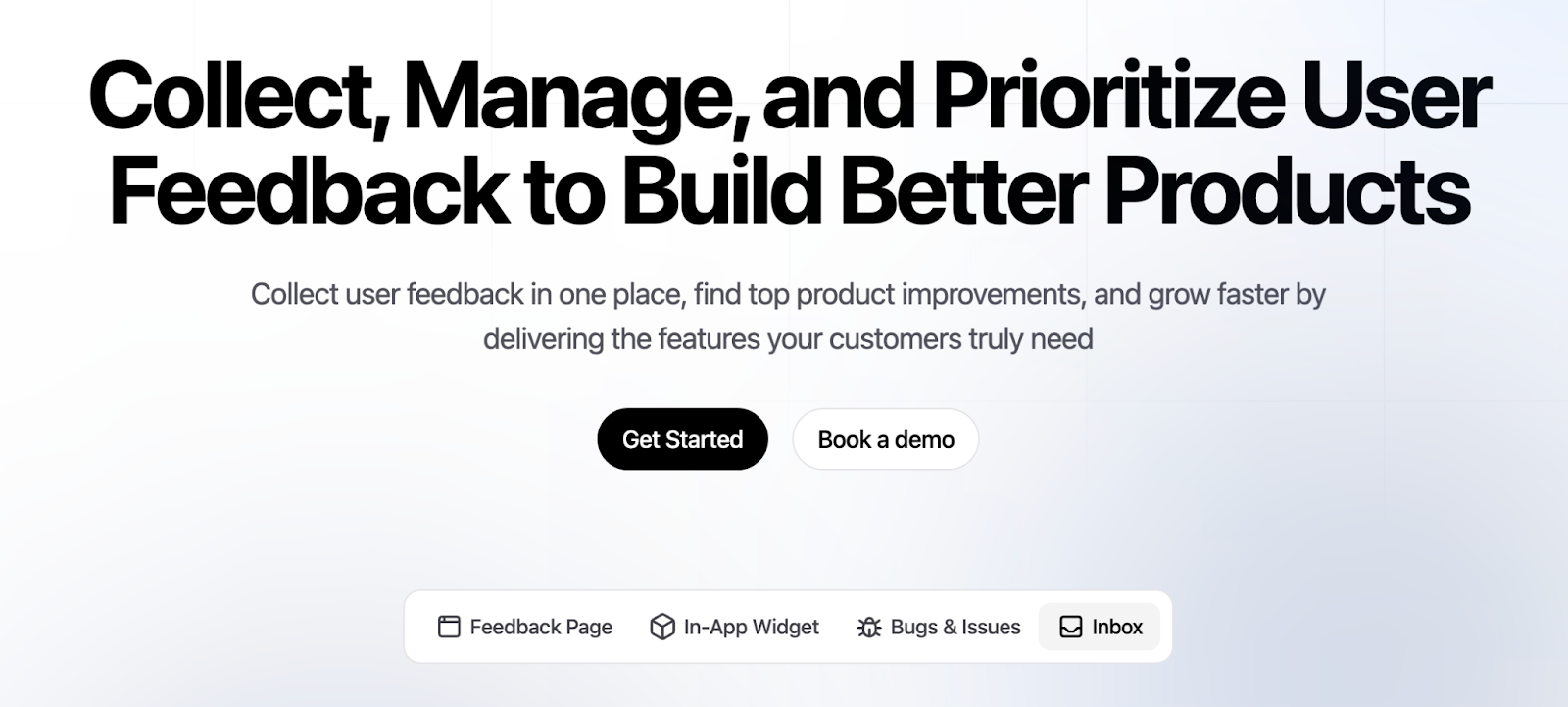
Changelogfy lets you collect, manage, and prioritize user feedback in one place. No more hunting through emails, chats, or spreadsheets—everything lands in a single inbox you and your team can sort in seconds.
- Feedback board & in‑app widget. Spin up a public feedback page where users can post ideas, vote, and discuss, or drop an embeddable widget straight into your product to capture bug reports and suggestions without leaving the app.
- Automatic duplicate detection. An AI matcher flags similar posts as users type, keeping your board clean and saving you the hassle of merging the same request over and over.
- User voting & email updates. Customers can up‑vote the ideas they care about, and Changelogfy notifies everyone automatically when you start or ship a feature, closing the feedback loop for you.
- Segment‑driven prioritization. Filter requests by plan, MRR, or any custom field, so high‑value customer needs float to the top of your roadmap.
- Roadmap & changelog in two clicks. Promote the most‑voted ideas to your roadmap, drag them through statuses, and publish release notes the moment something ships—no extra tools required.Ready to see it in action?
Share this article